AI-Powered Custom ERP System Development: What It Is, What It Costs, and How to Get It Right
Off-the-shelf ERP software often forces you to change how your business works. This guide explains how AI-powered custom ERP development builds the system around your workflows, where AI adds real value,
The majority of expanding companies encounter the same obstacle. One tool is used for sales, another for inventory, a third for accounting, and one team member spends every Friday piecing together spreadsheets to discover what is truly going on. Although off-the-shelf ERP software claims to address this issue, it frequently requires you to modify your procedures to work with the program.
The development of AI-powered custom ERP systems adopts a different strategy. You receive an ERP that is tailored to your company's operations and incorporates artificial intelligence into the decision-making processes. This book describes what that entails, where AI truly offers value, how the process works, and how to select a partner.
What Is an AI-Powered Custom ERP System?
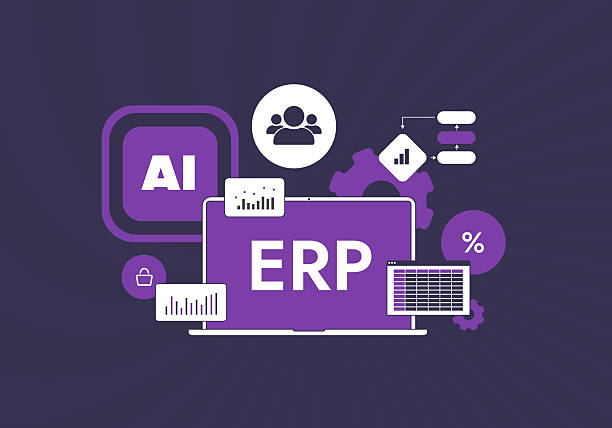
Your essential operations finance, inventories, procurement, sales, HR, production, and customer data are all connected by an ERP (Enterprise Resource Planning) system. Instead of being licensed as a generic package, a custom ERP is created especially for your business.
The AI-powered component indicates that automation and machine learning models are integrated into the system. Rather than merely documenting events, the ERP assists in forecasting future events and suggests next steps.
In actuality, that might appear as:
demand forecasting that modifies purchases according to supplier lead times, seasonality, and sales trends.
Automated invoicing and document processing that eliminates the need for human data entry by reading, matching, and routing documents.
anomaly detection that quickly identifies anomalous transactions, duplicate payments, or disparities in inventories.
A manager can ask "Which customers are late on payment this month?" and receive an answer without creating a report thanks to natural language reporting.
intelligent workflow routing that, using rules and historical behavior, assigns approvals to the appropriate individual.
Custom ERP vs. Off-the-Shelf ERP
Not everyone is a good fit for either choice. Usually, the choice is based on how special your operations are and how long you want to utilize the system.
An off-the-shelf ERP launches more quickly and costs less up front. The trade-off is that your options for scaling are constrained by the vendor's tiers, you have to modify your processes to fit the software, and you pay recurring licensing fees that frequently increase with each additional user. Instead of being tools that have been educated on your own data, AI features are typically general add-ons.
Although phased delivery allows you to go live gradually, a custom AI-powered ERP is more expensive up front and takes longer to develop. In exchange, the system is built to expand with you, the software adjusts to your workflows, and license costs are either negligible or nonexistent. Additionally, the AI models can be trained using your own operational data, and you own the code, eliminating vendor lock-in.
When your procedures are somewhat typical, off-the-shelf makes sense. When you have outgrown a system that requires costly workarounds, your workflows are unique, or you are paying high per-user license rates, custom development pays off.
Where AI Delivers Real Value in an ERP
AI isn't always helpful. Repetitive, data-intensive, high-volume activity yields the highest results.
Accounting and finance. Month-end close is accelerated by automated fraud detection, cash flow forecasting, expense classification, and invoice matching.
supply chain and inventory. You can avoid investing money on slow-moving items by stocking what will sell according to predictive analytics. Additionally, they can alert you to potential supply delays.
Sales and customer service. AI is able to rate leads, forecast churn, and recommend when repeat customers should place their orders.
Production and operations. When the system learns from past performance, scheduling, maintenance prediction, and resource allocation all improve.
Workforce planning and HR. Managing shift optimization, attendance trends, and hiring projections from a single data source becomes simpler.
The important thing to remember is that AI can only function as good as your data. Data quality is not an afterthought, but rather a component of a well-designed ERP project.
The Custom ERP Development Process, Step by Step
A well-managed project is staged to minimize risk and show progress early. This is an example of a normal engagement.
Process mapping and discovery. The group examines your goals, current tools, workflows, and pain spots. This stage should never be hurried because it determines the project's success.
Requirements and architecture. Modules, user roles, integrations, security requirements, and the applications of AI are all defined. The cloud strategy and technology stack are selected by the team.
interface design and user experience. Workers will utilize this system on a daily basis. Errors and training time are reduced with clear, role-based interfaces.
development in stages. Core modules are developed and made available gradually, frequently beginning with the most painful area.
creation and integration of AI models. Your historical data is used to train models, which are then verified for accuracy and linked to the appropriate workflows.
movement of data. Spreadsheets and legacy systems are used to clean, map, and transfer data.
Security review and testing. This includes compliance checks, access restrictions, load testing, and functional testing.
Training and deployment. With team support and training, the system launches in a controlled rollout.
Continuous assistance and development. As the business evolves, new features are added and models are tracked and retrained.
How to Pick an ERP Software Development Firm
The partner you select will shape your results more than any technology decision. If you are evaluating an ERP software development company, look beyond the sales pitch and check for these qualities:
Relevant ERP experience. Ask for examples of ERP or complex multi-module systems they have delivered, not only websites and simple apps.
Real AI capability. Ask how they build, test, and monitor machine learning models. A team that only wraps a chatbot around your data is not doing AI-powered ERP work.
Integration skill. Your ERP must connect with accounting tools, payment providers, e-commerce platforms, CRMs, and legacy databases.
Security and compliance knowledge. Depending on your industry, that may include SOC 2, HIPAA, PCI DSS, or state privacy laws.
A phased delivery model. Be cautious of anyone proposing one giant release after a year of silence.
Clear code ownership. After the project is finished, you should be the owner of the source code and documentation.
Post-launch support. ERP systems need maintenance, updates, and model retraining. Inquire about post-go-live support.
Transparent communication. Regular demos, honest timelines, and straight answers about trade-offs are signs of a mature team.
What Does Custom ERP Development Cost?
Cost varies greatly depending on scope, and any company that quotes a price without knowing what you require is speculating. The primary causes are:
The quantity of modules (production, CRM, finance, inventory, HR, and so forth)
Workflow and user role complexity
The quantity and caliber of AI capabilities
The quantity and complexity of third-party interconnections
Volume of data migration and cleansing requirements
requirements for security and compliance
Model of engagement and team location
A large, multi-department enterprise build is usually significantly more expensive than a targeted ERP for a small or mid-sized organization. Start with the modules that address your most pressing issues, launch them, and grow from there to keep the budget under control. Compare the alternative's overall cost over a period of three to five years, taking into account maintenance, workarounds, and licensing in addition to the initial quotation.
Common Mistakes to Avoid
attempting to construct everything at once. Big-bang projects are overbudget and run late. Work should be divided into phases.
disregarding the quality of data. Unreliable AI is produced by messy data. Set aside time for cleanup.
incorporating AI for its own sake. Every AI feature should be linked to a quantifiable result, like fewer errors, more hours, or more money.
ignoring user participation. Adoption suffers if the system's regular users are not consulted.
selecting based only on cost. Discovery, testing, and support are frequently omitted from the cheapest bid, and you have to pay for them afterward.
disregarding change management. If workers are not trained and assisted during the change, even the best system will fail.
Is a Custom AI-Powered ERP Right for Your Business?
It probably fits well if:
To perform essential tasks, you rely on spreadsheets or separate programs.
Your present ERP requires workarounds or imposes high per-user costs.
Because your processes are unique, generic software cannot support them.
Forecasting, automation, and insights derived from your own data are what you want.
You need a system that can grow without having to be rebuilt since you intend to expand.
A well-configured off-the-shelf system can be a better starting point if your budget is limited and your procedures are conventional. That's what an honest partner will tell you.
Final Thoughts: Build a System That Works the Way You Do
An ERP should make running your company easier rather than more difficult. With AI-powered custom ERP development, you can create a system that is tailored to your processes, incorporates intelligence where it matters, and offers you complete control over what you have created. As a result, there are fewer manual activities, better visibility, quicker decision-making, and a platform that advances rather than hinders you.
Talking about your objectives, workflows, and data is the next step if you are prepared to replace dispersed tools and inflexible software with a system created for your company. For a free ERP consultation, get in touch with Dunify right now. Our staff will assess your operations, suggest appropriate modules and AI capabilities, and provide you with a detailed plan and quote for your custom ERP project.